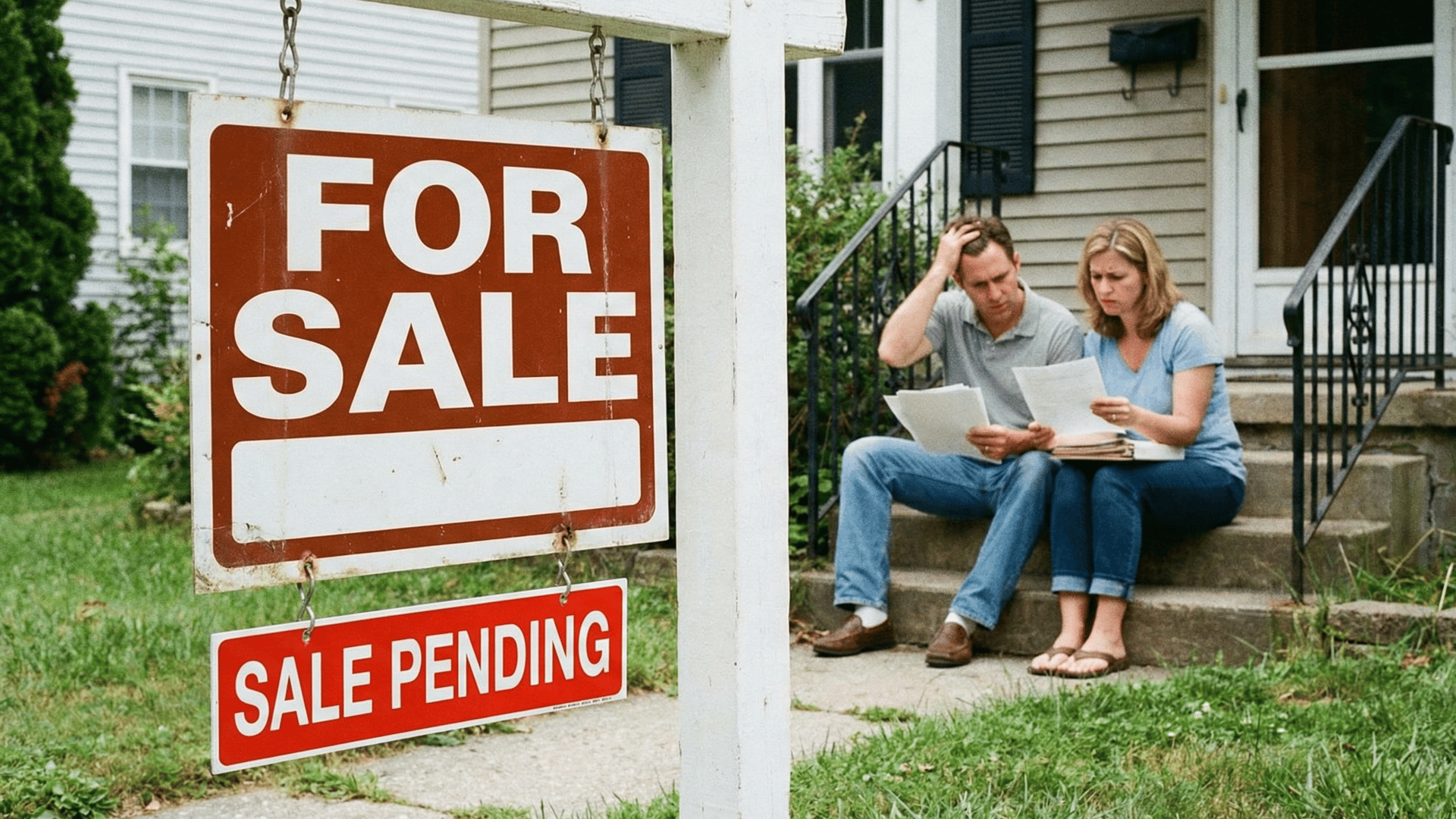
Home Purchase Cancellations Hit 15% in October 2025
Lisa Mailhot | December 6, 2025
Buyers
Lisa Mailhot | December 6, 2025
Buyers
Disclaimer: Some content in this article includes direct quotes and references from publicly available sources. Full credit is given to the original author and publisher. This blog post is for informational purposes only and does not claim ownership of any third-party content.
The real estate landscape is shifting dramatically, and October 2025 data reveals a trend that both buyers and sellers need to understand. Home purchase cancellations have climbed to 15.1%, representing approximately 53,000 failed transactions nationwide. This uptick from 14.3% the previous year signals a fundamental change in how today's buyers approach their home purchases, particularly in competitive markets like Orange County.
Understanding why buyers are walking away from deals has never been more critical. For sellers, this trend means adjusting expectations and strategies. For buyers, it represents both leverage and caution. The current market dynamics are creating a perfect storm of uncertainty, high costs, and increased options that are reshaping the traditional path to homeownership.
The rise in home purchase cancellations isn't happening in a vacuum. Several interconnected factors are driving buyers to reconsider their commitments even after going under contract.
Economic uncertainty tops the list of concerns keeping buyers up at night. When families are worried about job security, inflation, and the broader economic outlook, committing to a mortgage payment that could stretch 30 years becomes significantly more daunting. This hesitation manifests in cold feet right up until closing day, with some buyers backing out in the final week of their transaction.
High housing costs continue to challenge affordability across the nation. Even when buyers initially feel comfortable with their purchase price, the reality of total homeownership costs often hits harder during the inspection and financing periods. Between elevated mortgage rates hovering around 6.5% and home prices that remain stubbornly high, many buyers discover their monthly payments exceed their comfort zone once all costs are calculated.
The current buyer's market conditions have fundamentally altered negotiating power. With inventory levels significantly higher than the pandemic era, buyers know they have options. If a seller refuses to address maintenance issues or won't negotiate on price, buyers increasingly feel confident walking away to find another property that better meets their needs.
Inspection issues have emerged as a primary deal-breaker. Buyers who might have overlooked minor problems in a competitive market now have the luxury of being selective. When home inspections reveal foundation concerns, roof damage, or outdated electrical systems, today's buyers aren't afraid to cancel contracts rather than inherit expensive repair obligations.
The distribution of home purchase cancellations reveals fascinating regional patterns that speak to local market conditions and buyer concerns.
Texas and Florida dominate the cancellation statistics, with San Antonio leading at 21% of pending sales falling through. Fort Lauderdale follows at 20%, while Fort Worth, Las Vegas, and Jacksonville each see roughly 19% cancellation rates. These states share common characteristics that explain their elevated numbers.
Both Texas and Florida have been building homes at unprecedented rates, creating abundant inventory that gives buyers confidence they can find alternatives if a deal doesn't feel right. This construction boom has shifted power dynamics decidedly toward buyers, who can afford to be picky when choosing their next home.
Florida faces additional challenges beyond simple inventory levels. Rising insurance premiums have shocked many buyers during their due diligence period. When homeowners insurance quotes come back thousands of dollars higher than anticipated, or when buyers discover substantial HOA fees covering hurricane-related assessments, the total cost of ownership suddenly looks far less attractive.
Natural disaster concerns weigh heavily on Florida buyers' minds. The increasing frequency and severity of hurricanes have prompted many prospective homeowners to reconsider whether living in paradise is worth the risks and costs associated with climate vulnerability.
On the opposite end of the spectrum, Nassau County in New York posts the nation's lowest cancellation rate at just 4.4%. The Bay Area follows closely, with San Francisco at 4.6% and San Jose at 7%. These regions share characteristics that create stickier transactions, including limited inventory, strong local economies, and buyers who tend to be more financially prepared when they enter contracts.
Orange County's real estate market occupies a unique position within this national narrative. While the county shows home purchase cancellations running at 15.6% in October, slightly above the previous year's 14.7%, the local market demonstrates resilience that sets it apart from more volatile regions.
The median home price in Orange County reached $1.2 million in October 2025, reflecting 3.7% year-over-year growth. This appreciation continues despite broader market uncertainty, underscoring the region's enduring appeal. Properties are spending an average of 54 days on the market, compared to 40 days the previous year, indicating a more measured pace that benefits serious buyers while challenging sellers to price strategically.
Orange County's inventory situation remains notably tighter than the national picture. While active listings have increased compared to last year, the county is nowhere near the flood of inventory that characterized the Great Recession. This relative scarcity provides a floor under prices while giving qualified buyers more breathing room than they had during the pandemic's frenzy.
The local economy supports housing demand in ways that many other regions cannot match. Despite some employment fluctuations, Orange County maintains relatively low unemployment and continues to attract professionals in technology, healthcare, and other high-wage sectors. This economic foundation prevents the kind of distressed selling that could trigger significant price declines.
The elevated home purchase cancellation rate demands that Orange County sellers adjust their approach to successfully navigate today's market conditions.
Pricing strategy has become paramount. The days of testing the market with an optimistic price and waiting for buyers to negotiate down are fading. Sellers who price reasonably from the start are far more likely to attract serious buyers who close on their purchases. Overpricing in this environment often leads to extended market time, multiple price reductions, and increased likelihood that even interested buyers will develop cold feet.
Property condition and transparency matter more than ever. Consider conducting a pre-listing inspection to identify and address potential issues before buyers discover them. When sellers proactively disclose known problems and either fix them or price accordingly, buyers feel more confident proceeding to closing. Surprises during the buyer's inspection period are the quickest path to home purchase cancellations.
Flexibility in negotiations can save deals. When buyers request repairs or credits based on inspection findings, sellers should carefully evaluate whether accommodating reasonable requests is worth preserving the transaction. In many cases, a few thousand dollars in concessions is far less costly than starting over with a new buyer and enduring additional carrying costs.
Marketing must highlight value propositions. Professional photography, detailed property descriptions, and showcasing recent upgrades help properties stand out in a market where buyers have numerous options. Homes that tell a compelling story and demonstrate clear value relative to comparable properties are less likely to see their deals fall through.
Buyers operating in a market with elevated home purchase cancellation rates should approach their transactions thoughtfully while leveraging their increased negotiating power.
Get fully pre-approved before making offers. Pre-qualification letters carry little weight in today's market. Work with a mortgage lender to complete full underwriting, verify your income and assets, and understand exactly what monthly payment you can afford. Surprises during the financing process are a leading cause of failed transactions.
Take advantage of thorough due diligence periods. Don't rush your inspection or skip important steps like reviewing HOA documents and verifying insurance costs. The current market gives you permission to be thorough. If you discover issues that concern you, address them with the seller or feel confident walking away to find a better option.
Avoid making other major financial moves during your home purchase. Taking out a car loan, opening new credit cards, or changing jobs can jeopardize your mortgage approval even after you've gone under contract. Maintain financial stability from contract to closing.
Tour properties multiple times before committing. Visit your potential new home at different times of day, on weekdays and weekends. Talk to neighbors. Drive the commute during rush hour. The more confident you are in your decision, the less likely you'll experience buyer's remorse during the transaction.
Research the property's history. If a home recently fell out of contract, don't be shy about asking why. Previous inspection reports can provide valuable insights into potential issues you should examine carefully.
The elevated home purchase cancellation rate represents market recalibration rather than crisis. Orange County's fundamentals remain strong, with desirable locations, quality schools, employment opportunities, and lifestyle amenities that continue attracting buyers.
Mortgage rates will significantly influence market direction in coming months. If rates decline meaningfully toward 6% or below, buyer activity could surge and reduce cancellation rates as affordability improves. Conversely, if rates climb, expect cancellations to remain elevated as fewer buyers can comfortably afford their target price points.
Seasonal patterns will continue playing their traditional role. Winter typically sees reduced inventory and slower transaction volumes, while spring brings renewed buyer activity. Orange County sellers listing in early 2026 should prepare for increased competition as new inventory enters the market during the traditional spring selling season.
The shift toward a more balanced market benefits both buyers and sellers who approach transactions realistically. Buyers gain the time and leverage to make informed decisions without the pressure of bidding wars. Sellers who price appropriately and maintain their properties well can still achieve strong results, even if transactions take longer than they did during the pandemic's unusual conditions.
Navigating a market with elevated home purchase cancellations requires local expertise and strategic guidance. Whitestone Real Estate understands Orange County's unique market dynamics and knows how to position properties for successful closings. Whether you're concerned about your home sitting on the market or want to leverage current buyer conditions to find your ideal property, working with professionals who track every market shift gives you a decisive advantage.
The real estate landscape is complex, but it's also filled with opportunities for those who approach it with the right information and strategy. Understanding why home purchase cancellations are occurring and what it means for your specific situation is the first step toward making confident real estate decisions in 2025.
Reference: Katz, L. (2025, December 3). 15% of home purchases fell through in October, up slightly from a year earlier. Redfin News.
Harvard's 2026 housing report reveals deep affordability struggles nationwide. Here's what it means for Orange County buyers and sellers.

Mortgage rates hover in the mid-6% range this June. Here's what buyers and sellers in Orange County need to know right now.

Home delistings hit near-record highs in April 2026. Learn what's driving sellers to pull listings and what it means for Orange County buyers and sellers.

Homeowners insurance premiums are climbing fast. Learn what's driving costs up and what it means for buyers and sellers in today's market.

Pending home sales drop for the second week as mortgage rates hit a 10-month high. Here's what it means for buyers and sellers today.

Housing affordability improved for 7 straight months. Learn what falling income requirements mean for buyers and sellers in Orange County and beyond.

Price cuts fell slightly in April 2026 as buyer demand rebounds. See what this means for Orange County buyers and sellers right now.
U.S. home prices rose 2.4% in April 2026, the biggest gain in 13 months. Here's what buyers and sellers in Orange County need to know now.
The U.S. housing market still favors buyers, but the gap is shrinking. Here's what April 2026 data means for Orange County.
Let's find a time that suits you best to chat about your goals, show you how we work, and figure out how we can help you the most
Get In Touch With Lisa

Broker Associate
949-877-7087
124 Tustin Ave Suite 200, Newport Beach, CA 92663