Embracing the Resurgence of Typical Seasonal Home Price Trends
Lisa Mailhot | September 26, 2023
Buyers

Lisa Mailhot | September 26, 2023
Buyers
If you're contemplating a real estate move, you're likely pondering the state of home prices. Despite the media buzz, national home prices aren't in decline; rather, they're entering a phase of more conventional growth. To truly grasp this trend, here's the context you need.
In the realm of real estate, there are recurrent patterns known as seasonality. Spring reigns as the prime homebuying season, characterized by heightened market activity. Summer continues with robust training, but as calmer months approach, the vigor wanes. Home prices closely mirror this seasonality because prices appreciate most when demand peaks.
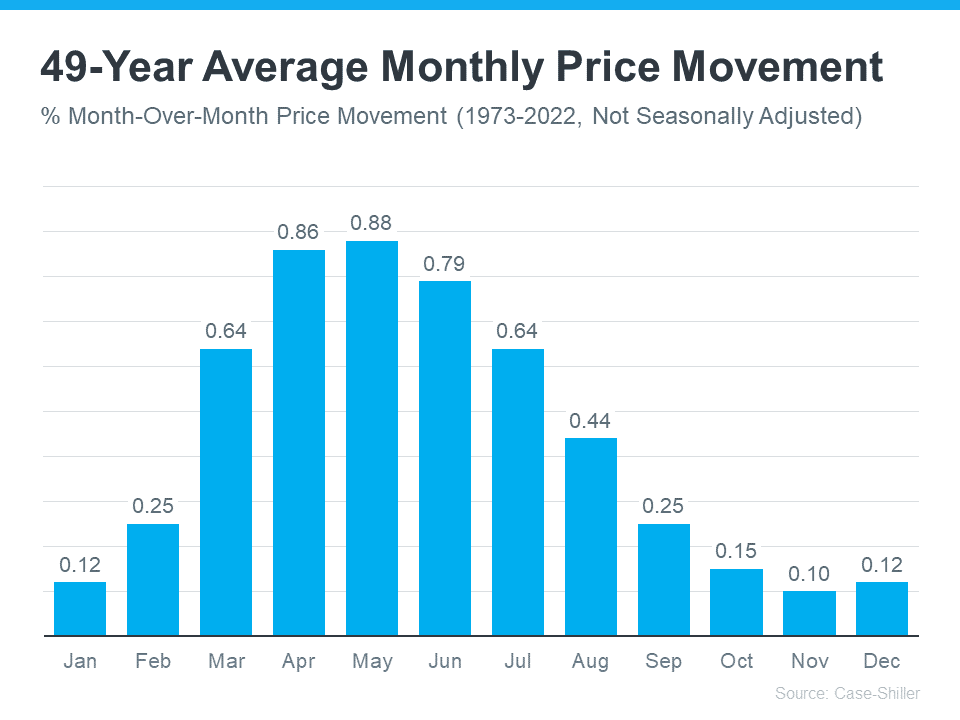
Hence, a dependable, long-term home price trend emerges. The graph below, based on Case-Shiller data from 1973 to 2022 (unadjusted to display seasonality), illustrates typical monthly home price fluctuations:
As the data illustrates, early in the year, home prices rise, though not as sharply as in the spring and summer months. January and February see less activity due to fewer moves in the colder season. As the market shifts into the peak homebuying season during spring, activity surges, resulting in more substantial price increases. Subsequently, as autumn and winter approach, activity eases, and price growth, while still appreciating, slows.
After several exceptional "unicorn" years, the return of seasonality signals the influence of today's elevated mortgage rates. Selma Hepp, Chief Economist at CoreLogic, explains:
“High mortgage rates have slowed additional price surges, with monthly increases returning to regular seasonal averages. In other words, home prices are still growing but are in line with historic seasonal expectations.”
In the approaching months, media coverage will intensify regarding home prices, featuring industry jargon such as:
Don't let the terminology bewilder you, nor allow misleading headlines to instill unnecessary apprehension. The breakneck pace of recent years' home price growth was unsustainable; a slowdown was inevitable. What we're witnessing is a deceleration of appreciation, not depreciation.
Remember, it's customary for home price growth to taper off as the year progresses. This by no means implies that home prices are plummeting; they're merely ascending at a more restrained rate.
Despite fear-inducing headlines and confusion surrounding the state of home prices, the reality is straightforward. Home price appreciation is reverting to conventional seasonal patterns. If you have inquiries about local price trends, let's connect.
The 2026 summer housing market has slowed nationwide, giving buyers more time and leverage. Here's what it means for Orange County movers.

Fannie Mae and Freddie Mac's new condo underwriting rules could slow approvals and raise costs. Here's what Orange County buyers and sellers need to know.

A new federal housing law cuts red tape and boosts construction. Here is what it means for Orange County buyers, sellers, and investors.
Homebuyer affordability dropped for a fifth month in a row. Here's what it means for Orange County buyers and sellers and how to plan your next move.

New Redfin data reveals weather beats affordability as the top reason Americans relocate, and Orange County has exactly what movers are chasing.
Pending home sales rose as mortgage rates briefly dipped. Here's what this summer housing market shift means for Orange County buyers and sellers.

Fed Governor Waller wants less forward guidance on rates. Here's what that means for Orange County buyers and sellers trying to time the market.
A new Redfin survey shows most homeowners feel their home reflects who they are. Here's what it means for Orange County buyers.
Harvard's 2026 housing report reveals deep affordability struggles nationwide. Here's what it means for Orange County buyers and sellers.
Let's find a time that suits you best to chat about your goals, show you how we work, and figure out how we can help you the most
Get In Touch With Lisa

Broker Associate
949-877-7087
124 Tustin Ave Suite 200, Newport Beach, CA 92663